

Give acid-loving plants the soil they crave.
- Lowers soil pH naturally for blueberries, azaleas, hydrangeas, and more
- Pelletized for easy, even spreading by hand or broadcast spreader
- Corrects alkaline soils that lock out iron, manganese, and other nutrients
- Gradual release — won't shock plants or burn roots
$24.00
- Hand broadcast or rotary spreader
- General pH reduction:
- Apply 5-10 lbs per 1,000 sq ft depending on current pH and target
- Work into top 2-4 inches of soil when possible
Pelletized soil sulfur to lower pH for acid-loving plants like blueberries, azaleas, and hydrangeas.
Build a complete lawn & soil program with biological inputs.
High pH soil is starving your plants
Nutrient Lockout
In alkaline soils (pH above 7.0), iron, manganese, zinc, and other micronutrients become unavailable to plants. You can fertilize all day and your blueberries will still show yellow leaves.
Chlorosis and Decline
Those yellow leaves with green veins? That's iron chlorosis — the hallmark of pH problems. Your plant isn't lacking iron. The soil is holding it hostage.
Wasted Money on Fertilizer
Applying nutrients to high-pH soil is like filling a locked bucket. The fertilizer is there, but your plants can't access it. You're paying for results you'll never see.
How It Works
| Feature | What It Means for You |
|---|---|
| Pelletized sulfur | Easy to spread evenly by hand or broadcast spreader — no dusty powder blowing away |
| Natural pH reduction | Soil microbes convert sulfur to sulfuric acid gradually, lowering pH without shocking plants |
| Unlocks micronutrients | As pH drops into the correct range, iron, manganese, and zinc become plant-available again |
| Long-lasting effect | One application adjusts pH over 6-12 weeks as soil biology processes the sulfur |
| Safe for edibles | Use around blueberries, strawberries, and other food crops with confidence |
Application: Hand broadcast or rotary spreader
General pH reduction: • Apply 5-10 lbs per 1,000 sq ft depending on current pH and target • Work into top 2-4 inches of soil when possible • Always test soil pH before and after application Blueberries and acid-loving shrubs: • Target pH: 4.5-5.5 • Apply around drip line and work into mulch/soil • Retest in 8-12 weeks and reapply if needed Hydrangeas (for blue blooms): • Lower pH below 6.0 for blue flower color • Apply in early spring before bud set Important: • Do not exceed 10 lbs per 1,000 sq ft in a single application • Sandy soils require less sulfur than clay soils for the same pH change • Results are gradual — allow 6-12 weeks for full effect
Calculate Exact Quantity for My AreaThe pH Problem Nobody Talks About
You can have the best fertilizer program in the world and still watch your plants struggle. The reason? Soil pH. When pH is too high (alkaline), essential micronutrients like iron, manganese, and zinc become chemically locked in the soil. Your plants literally cannot access them, no matter how much you feed.
This is especially critical for acid-loving plants — blueberries, azaleas, hydrangeas, rhododendrons, and camellias. These plants evolved in acidic forest soils and simply cannot thrive when pH creeps above 6.0-6.5. Yellow leaves, stunted growth, and poor fruit set are the visible symptoms. The invisible problem is nutrient lockout at the root level.
How Soil Sulfur Works
Soil sulfur doesn’t lower pH directly — it works through your soil’s biology. Microbes in the soil convert elemental sulfur into sulfuric acid over a period of 6-12 weeks. This gradual process is safer for plants and more sustainable than fast-acting chemical acidifiers that can shock root systems.
The pelletized form makes application practical. No sulfur dust blowing across your garden. Spread evenly with a hand broadcaster or rotary spreader, water in, and let soil biology do the work.
Test First, Then Treat
Soil sulfur is powerful, and over-application can push pH too low. Always start with a soil test — your county extension office can run one for a few dollars. Know your starting pH, identify your target range, and apply accordingly. Retest in 8-12 weeks to verify results before making additional applications.
How much do I need?
Stays on this page. Enter your area and get a mix rate for Give acid-loving plants the soil they crave..
Calculate Your Rate
A 1/4 acre lawn is about 10,890 sq ft
Application Method
Hand broadcast or rotary spreader
Enter your area to see results
This calculator provides planning guidance based on standard label rates. Actual application rates may vary based on site conditions, product formulation, and local regulations. Always refer to the product label for official rates.
Frequently Asked Questions
How much will it lower my soil pH?
That depends on your starting pH, soil type, and application rate. As a general guideline, 5 lbs per 1,000 sq ft will lower pH by approximately 0.5-1.0 points in loamy soil. Clay soils require more; sandy soils require less. Always start with a soil test.
How long does it take to work?
Soil sulfur works through biological conversion — soil microbes process elemental sulfur into sulfuric acid over 6-12 weeks. It's gradual by design, which is safer for plants than fast-acting acidifiers.
Can I use it on my lawn?
Yes. If your lawn soil tests above optimal pH (6.0-7.0 for most grasses), soil sulfur can bring it into range. Centipede grass in particular prefers lower pH (5.0-6.0). Apply and water in.
Will it turn my hydrangeas blue?
Lowering soil pH below 6.0 allows hydrangeas to absorb aluminum from the soil, which produces blue blooms. Apply in early spring before buds form for best results.
Can I apply it at the same time as fertilizer?
Yes, but test your soil first. If pH is already in the right range, adding sulfur could push it too low. Get your pH corrected first, then fertilize — you'll see much better results once nutrients are actually available to the plant.
4.5-5.5
Target pH for Blueberries
6-12 wk
Gradual pH Adjustment
Safe
For Edible Crops
A+
BBB Rating
My blueberry bushes had yellow leaves for two seasons despite regular fertilizing. Soil test came back at 7.2 pH. Two applications of Soil Sulfur brought it down to 5.4 and the bushes completely transformed — dark green leaves and the best harvest we've had.
Customer Reviews
5.0
Related Products
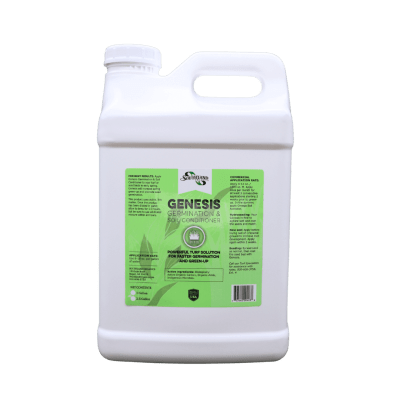
Genesis
Genesis is a liquid soil conditioner that provides all the building blocks you need to establish stronger, greener turf—faster! Formulated with biologically active, organic matter, Genesis accelerates green-up and is scientifically proven to increase germination rate, soil quality, plant height and mass area. Benefits of Genesis: Stimulates root growth Increases green-up Accelerates seed germination Chelates soil nutrients and decreases leaching Aerates and loosens compacted clay soils Preconditions and activates soil biology to withstand stress Boosts fertilizer applications and unlocks existing soil nutrients Combats negative fungal and bacterial growth Genesis is also available in our Lawn Care Bundles.
Best for: Lawn & turf soil biology

Veridian Humate + Liquid Iron for Lawns
Feed the soil. Green the grass. Veridian blends humic acid with a Ferrous Amino Acid Complex — 3% iron by volume — so you get a darker lawn and a soil conditioner in one jug. Humic acid chelates locked-up minerals, feeds the microbes that break down thatch, and raises CEC so nutrients stay in the root zone instead of leaching. The iron increases chlorophyll for color without pushing a flush of top growth. Works on bermuda, zoysia, fescue, St. Augustine, and centipede. Tank-mix compatible with most liquid fertilizer programs. Benefits Delivers chelated iron plus humic acid Darker green color without a growth surge Improves nutrient uptake and soil structure Helps water retention in Southern clay Corrects iron deficiency at the 10 oz / 1,000 sq ft rate Brand page: southlandorganics.com/products/veridian-humate-liquid-iron-for-lawns.
Best for: Lawn & turf soil biology

Talk to Mike Usry
Have questions about Soil Sulfur? Our team has helped over 1,000 farms find the right solution. Call us or shop now.
Give acid-loving plants the soil they crave.
$24.00