

In poultry processing, minimizing operational costs while ensuring environmental compliance is paramount. One area of significant expense and ecological impact is waste water treatment. A chicken processing plant leveraged innovative waste water treatment PORT to achieve remarkable TSS reduction and substantial savings.
Problem: Reducing expensive waste hauling costs by cutting TSS.
At a poultry processing facility, operational efficiency hit a stumbling block when it came to managing the waste water treatment process. The main problem was their 140,000-gallon capacity aerobic digester that was underperforming in terms of sludge settlement. Initially, the solution seemed straightforward–the addition of a polymer to the sludge stream aimed at enhancing settlement and thus improving the efficiency of waste water treatment. However, the anticipated improvements did not materialize as expected. The polymer, while a commonly employed agent in improving sludge settlement, failed to deliver the needed efficiency in this case.
This underperformance was not just a technical hiccup; it had tangible financial implications. The facility was incurring significant costs for waste hauling and disposal, priced at 4.4 cents per gallon. In the poultry processing industry, where margins can be thin, such costs cannot be overlooked. Each gallon of inefficiently treated water not only represented an operational inefficiency but also translated into unnecessary expenditure, compounding the urgency for a more effective solution.
Challenge: Provide a substantial reduction in TSS to reduce waste hauling and disposal fees.
The poultry processing facility needed to achieve a significant reduction in Total Suspended Solids (TSS) within its waste water stream. The presence of high TSS levels in the waste water directly impacted the facility’s waste hauling and disposal fees, a significant and recurring expense that eroded profit margins. Given the facility’s output and the volume of water treated, even marginal reductions in TSS could translate into considerable savings.
However, the pursuit of TSS reduction was fraught with complexity. The intricate nature of waste water from poultry processing involves a variety of organic and inorganic materials, making the treatment process challenging. Traditional methods, such as the addition of polymers for sludge settlement, had proven inadequate, leading to the exploration of more innovative solutions.
Solution: Add PORT waste water treatment to reduce TSS in the aerobic digester.
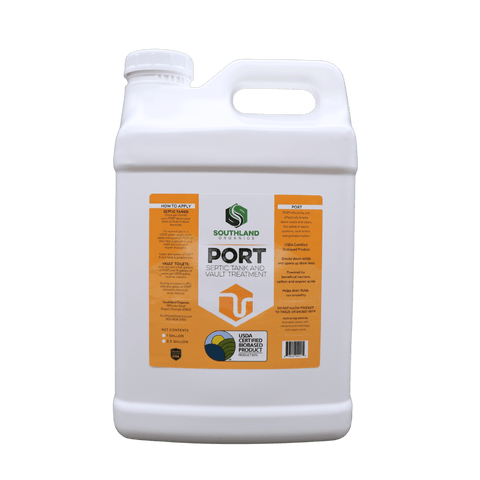
Navigating through the operational inefficiencies and financial burdens caused by high TSS levels, the poultry processing facility implemented PORT waste water treatment in their digester. The process involved meticulous monitoring of the visual decanting of the water, ensuring that the clarity met the stringent requirements necessary for reducing the volume of solids slated for waste haul.
The introduction of PORT into the system marked a pivotal change in the facility’s approach to waste water treatment. The regimen commenced with an initial shock rate of 100 ppm, followed by a maintenance dosage of 32 ppm, carefully calibrated to maintain the efficiency of the treatment process. By integrating this system, the facility took a significant step toward achieving its goal of substantial TSS reduction, setting a new standard in waste water treatment efficacy.
Conclusion: 36,000-gallon reduction of water going to the waste haul, equal to saving $1,600.00 per pump.
Implementing PORT paid off within days. By achieving a remarkable 36,000-gallon reduction in the volume of water designated for waste haul, the facility not only took a giant leap towards sustainable operation but also unlocked immediate financial savings amounting to $1,600.00 per pump.
This level of efficiency and cost-saving was not a one-time occurrence. The facility has replicated this procedure multiple times, consistently achieving the same amazing results.
By prioritizing the reduction of Total Suspended Solids (TSS), the facility has not only enhanced its financial bottom line but has also contributed positively to environmental conservation efforts. This success story serves as a powerful testament to the efficacy of adopting advanced technologies like PORT in tackling the complex challenges of waste water treatment.
Written by
Content Manager (Former)
Agricultural content specialist • Poultry industry researcher
Isabella served as Content Manager at Southland Organics, creating educational resources that help farmers understand and implement organic solutions for poultry, turf, and agriculture.
View full profileReviewed by

Founder & CEO
20+ years in organic agriculture • Humate & soil biology specialist
With years of experience in humate deposits and soil biology, Mike brings practical knowledge from the field to every conversation. He founded Southland Organics to create sustainable solutions that work with nature, not against it.
View full profile

