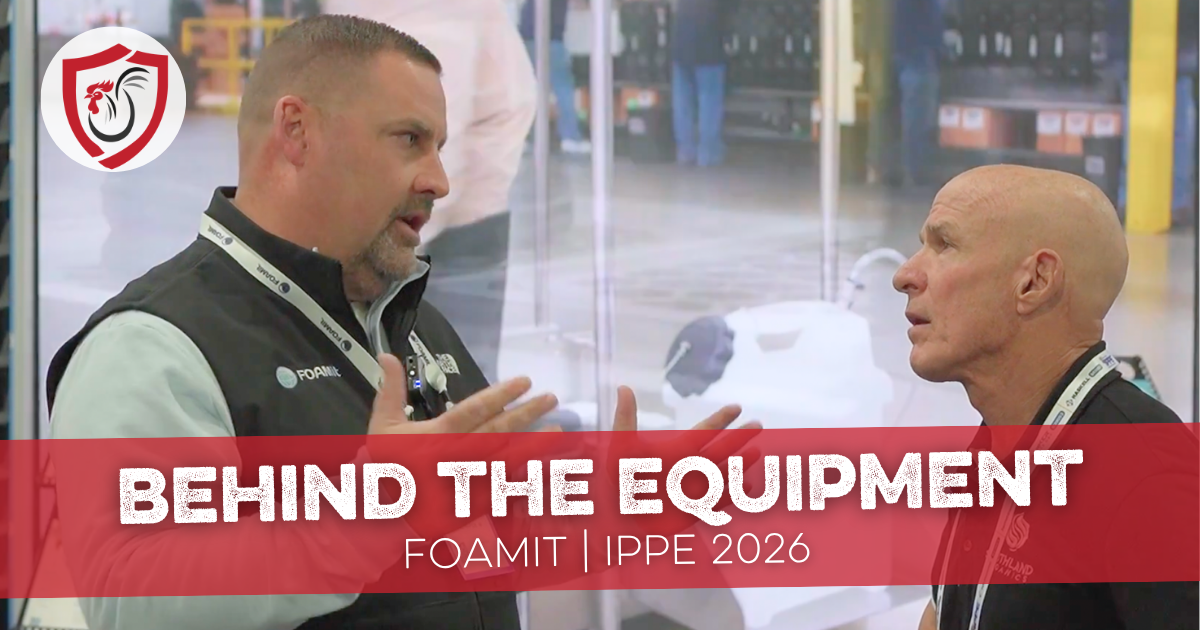
As temperatures rise, ventilation management becomes critical—especially during the last third of a flock. In a recent interview, Dr. Michael Czarick shared practical hot weather ventilation tips growers can use to reduce heat stress and improve flock performance.
Dr. Czarick on Hot Weather Ventilation
After recently sitting down with Dr. Michael Czarick to discuss the Poultry 411 app, we asked him to stick around a little longer to share some practical ventilation advice for growers heading into warmer weather.
If you’ve spent any time around poultry ventilation conversations, chances are you’ve heard Dr. Czarick’s name. As an Extension Engineer and Senior Public Service Associate in the Department of Poultry Science at the University of Georgia, he’s one of the industry’s most trusted voices on poultry house ventilation.
And when it comes to hot weather, his message is clear: focus on the last third of the flock.
Why the Last Third of the Flock Matters Most
According to Dr. Czarick, heat stress becomes most critical during the final third of a flock.
That’s when:
- Bird density is highest
- Heat production is greatest
- Cooling birds becomes significantly harder
“The last week or two is when heat stress is going to be your biggest problem,” Dr. Czarick explained. For growers, this means ventilation strategies during hot weather need to shift as birds get older and heavier. A younger flock may not require maximum fan power, but as birds approach market age, ventilation becomes increasingly important.
1. Prioritize Air Speed During Hot Weather
One of Dr. Czarick’s biggest recommendations is simple: maximize air speed.
You can’t have too much air speed during that last week or two of the flock.
Air movement helps birds cool themselves more effectively, especially as body heat and stocking density increase. While growers often focus on temperature alone, Dr. Czarick emphasized that airflow plays an equally important role in helping birds manage heat stress.
2. Keep Your Birds Spread Out
Heat stress isn’t just about outside temperatures—it’s also about how birds are distributed throughout the house. When birds crowd together, the temperature they experience can feel several degrees hotter than what controllers or temperature sensors show.
Birds packed together can increase the effect of temperature three, four or five degrees.
That’s why flock distribution matters long before hot weather arrives.
Use Water Meters to Monitor Bird Distribution
So how do growers know whether birds are spread evenly? Dr. Czarick recommends installing at least two water meters in each poultry house.
By monitoring water consumption at both ends of the house, growers can spot uneven bird distribution early and make adjustments before heat stress becomes a problem. When birds are evenly distributed, they have more space between them, helping improve airflow and cooling during hot weather.
The key, according to Dr. Czarick, is preparation. Once birds reach the last third of the flock, there’s very little growers can do to fix uneven distribution.
3. Don’t Overuse Evaporative Cooling
One of the biggest hot weather mistakes growers make is turning on evaporative cooling too early. While evaporative cooling lowers air temperature, it also raises humidity inside the poultry house. And humidity creates challenges for birds trying to cool themselves.
Evaporative cooling is not air conditioning.
Unlike air conditioning, which lowers both temperature and humidity, evaporative cooling reduces temperature while increasing moisture in the air. That higher humidity can interfere with a bird’s natural cooling process. Because chickens rely heavily on panting to cool themselves, excess humidity makes it harder for them to release heat effectively.
Dr. Czarick recommends focusing on air speed first and waiting to use evaporative cooling until temperatures reach around 84–85°F.
4. Run Fans at Night
Many growers assume nighttime naturally brings relief from heat stress. But according to Dr. Czarick, nighttime conditions can still be challenging for birds.
Why? Humidity often climbs to 90–100% overnight.
Even if temperatures fall into the 70s, birds may still struggle to cool themselves because high humidity reduces evaporative heat loss through respiration. For this reason, Dr. Czarick recommends running fans aggressively during the final 7–10 days of the flock—even overnight.
There’s no such thing as saving power the last week or two of the flock during hot weather.
Instead, growers should conserve energy earlier in the flock and prioritize ventilation when birds need it most.
Hot Weather Ventilation Requires a Different Mindset
One of the biggest takeaways from the conversation with Dr. Czarick is that not all air is equal. Cooler air alone doesn’t guarantee bird comfort. Temperature, humidity, air speed, and bird density all work together to influence flock performance.
And while every farm (and every house!) is different, understanding the science behind ventilation can help remove some of the guesswork.
As temperatures rise, paying closer attention to airflow, bird distribution, and humidity can make a meaningful difference in flock performance and heat stress management.
Contact Us
If you have any questions for us, reach out to me at allen@southlandorganics.com. Until next time!
Table of Contents
- Dr. Czarick on Hot Weather Ventilation
- Why the Last Third of the Flock Matters Most
- 1. Prioritize Air Speed During Hot Weather
- 2. Keep Your Birds Spread Out
- Use Water Meters to Monitor Bird Distribution
- 3. Don’t Overuse Evaporative Cooling
- 4. Run Fans at Night
- Hot Weather Ventilation Requires a Different Mindset
- Contact Us
Written by

Vice President & Director of Operations
10+ years in commercial poultry operations • Poultry Development Representative
Allen serves as Vice President and Director of Operations, overseeing poultry development and ensuring our products reach the growers who need them most.
View full profileReviewed by

Marketing
Marketing, Southland Organics • Agricultural marketing & content
Erin handles marketing at Southland Organics, crafting the campaigns and content that connect growers with the organic solutions they've been looking for.
View full profile